Chocolate has been around for thousands of years.
And for most of that time, it was simple: cacao + something sweet.
But modern chocolate? It’s become something very different.
1. Emulsifiers: The invisible shortcut
Walk into any grocery store and check the back of a chocolate bar.
You’ll likely see ingredients like:
- Soy lecithin
- PGPR (Polyglycerol Polyricinoleate)
These are called emulsifiers.
Why are they used?
Not for your benefit.
For manufacturing.
They allow chocolate to flow more easily through industrial machines, while using less cocoa butter…
one of the most expensive ingredients.
What does that mean for you?
- Waxy or “plastic” texture instead of a natural melt
- Muted flavor, losing the complexity of real cacao
- Often sourced through industrial chemical extraction methods
In simple terms: emulsifiers help scale production, but compromise quality.
2. Additives: What labels don’t tell you
Beyond emulsifiers, many chocolate bars include a range of additives.
Some common ones:
- E442 (Ammonium phosphatide)
- E471 (Mono- and diglycerides)
- Carrageenan
- Xanthan gum
The problem isn’t just what they are…
It’s what they can do.
Emerging research suggests links between certain emulsifiers and:
- Gut microbiome disruption
- Chronic inflammation
- Increased risk of metabolic disorders like Type 2 diabetes
- Potential associations with cardiovascular disease
Some studies have even explored correlations with higher cancer risk in high long-term intake scenarios.
The gut connection
Your gut has a protective lining.
Some emulsifiers can weaken that barrier, leading to:
- “Leaky gut”
- Increased inflammation
- Imbalance in healthy bacteria
Over time, this can affect everything from digestion to energy levels.
3. Transparency: The labeling grey zone
Even if you check the label…you might not be getting the full picture.
Common loopholes:
1. Multiple names for the same thing
An additive might appear as:
- “E442”
- or “Ammonium phosphatide”
Same ingredient. Different perception.
2. Processing aids aren’t always listed
Some substances used during production don’t need to appear on the label.
Even if traces remain.
3. “Clean label” marketing
Brands may replace synthetic additives with plant-based alternatives
that serve the same function…and still market them as “natural.”
So, what should chocolate actually be?
At its core, chocolate doesn’t need complexity. It needs quality.
The closer it is to:
- Real cacao
- Minimal ingredients
- No unnecessary processing
…the closer it is to what chocolate was meant to be.
The takeaway
Most chocolate today isn’t just chocolate.
It’s a product optimized for:
- Cost efficiency
- Shelf stability
- Mass production
Not for purity.
Not for transparency.
And not always for your body.
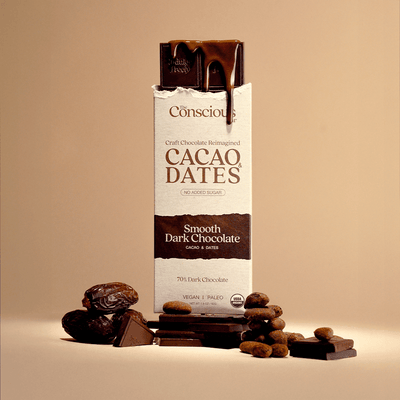
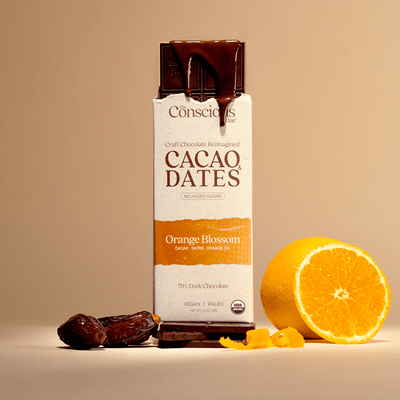
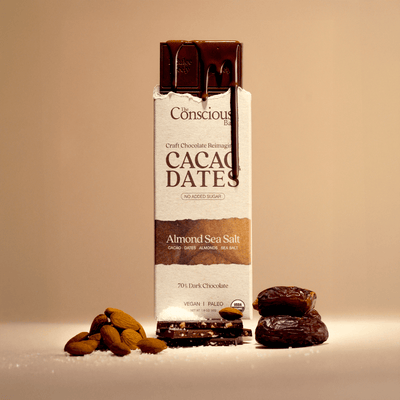
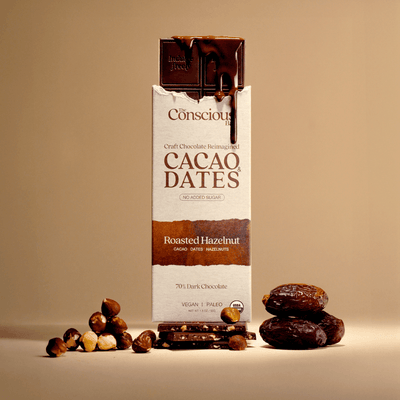
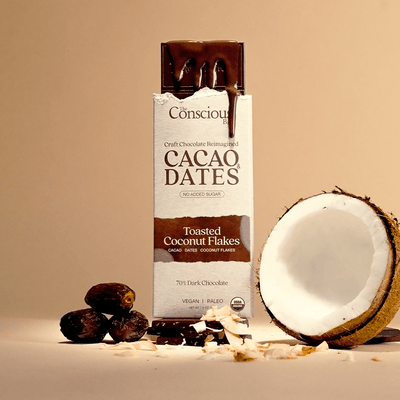
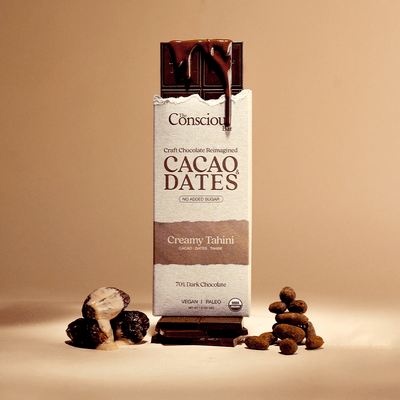
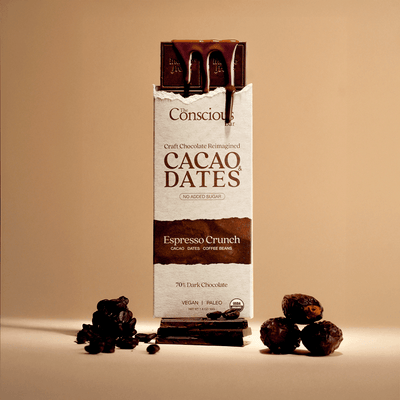
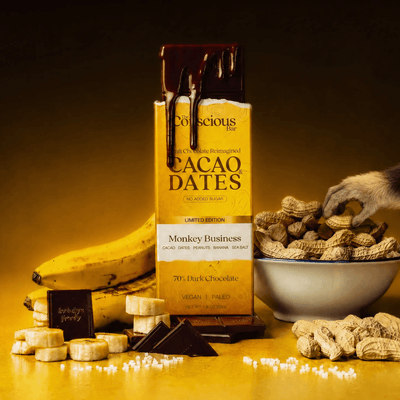
Want to see what simple chocolate looks like? Treat yourself
Sources
- Foodwatch – Food additive safety and transparency issues
- ScienceDirect – Emulsifiers and interaction with food compounds
- Oxford Academic – Food additive health implications
- PubMed Central – Emulsifiers and gut microbiota disruption
- Observatoire Prévention – Cardiovascular risk and additives
- PubMed – Food additive emulsifiers and cancer risk
- PubMed – Artificial food additives: hazardous to long-term health?
- PubMed – Food additive emulsifiers and risk of cardiovascular disease