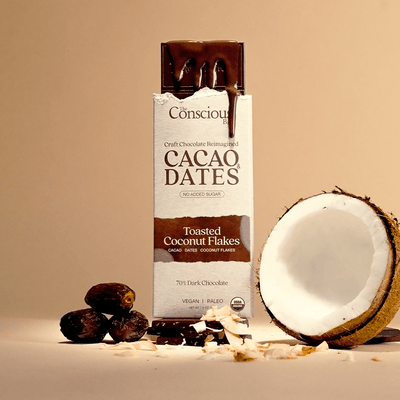
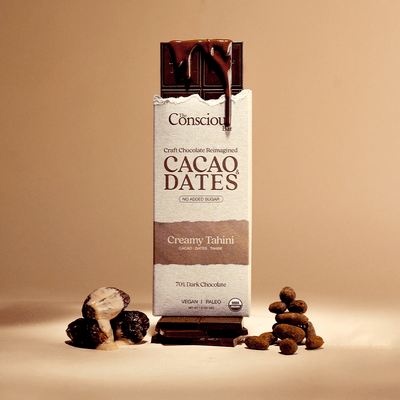
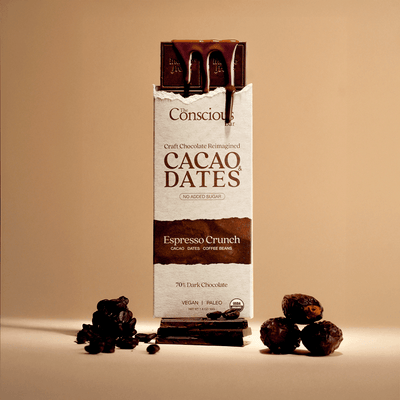
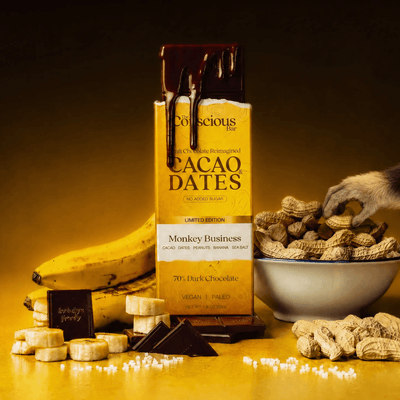
Every chocolate bar tells a story.
Not through branding.
Not through marketing.
Through its ingredient list.
And once you know how to read it, you can instantly tell the difference between real chocolate…and a manufactured product designed for cost and shelf life.
Why Fewer Ingredients Usually Means Better Chocolate
At its core, chocolate doesn’t need much:
- Cacao (or cocoa mass)
- Cocoa butter
- A sweetener
That’s it.
When you see a short ingredient list, it usually means one thing: The brand is relying on the quality of the cacao itself, not additives.
1. Pure Flavor Comes From the Bean
Cacao is naturally complex.
Depending on origin, it can have notes of:
- Fruit
- Nuts
- Caramel
- Even floral tones
But these nuances only show up when they’re not masked. Excess sugar and artificial flavors flatten the experience. A simple formula lets the cacao speak.
2. Real Texture Comes From Cocoa Butter
High-quality chocolate uses cocoa butter as its primary fat.
Why that matters:
- It melts at body temperature
- It creates a smooth, clean finish
- It doesn’t leave a coating in your mouth
When brands replace it with cheaper fats (like palm oil), you get a waxy or greasy texture instead.
3. Minimal Processing Preserves What Matters
Cacao naturally contains:
- Flavanols
- Antioxidants
- Minerals like magnesium
The more a product is processed and diluted, the more these compounds are lost. Simple formulations tend to preserve more of what makes cacao valuable.
What Long Ingredient Lists Usually Mean
When a chocolate bar has a long list of ingredients, it’s rarely accidental.
It’s usually the result of optimizing for:
- Cost
- Shelf life
- Mass production
Here’s what to look out for:
1. Cheap Fats Replacing Cocoa Butter
Vegetable oils or palm oil are often used to cut costs.
The tradeoff?
A completely different texture and melt.
2. Emulsifiers and Fillers
Ingredients like soy lecithin or PGPR are added to:
- Thin the chocolate
- Use less cocoa butter
- Make manufacturing easier
They’re not there for you.
They’re there for efficiency.
3. Sugar as the Main Ingredient
If sugar is listed first, you’re not eating chocolate.
You’re eating sugar with a hint of cacao.
4. Artificial or “Natural” Flavoring
These are often used to compensate for lower-quality beans.
Instead of improving the cacao, they simulate what good cacao would taste like.
5. Ultra-Processing for Shelf Life
Long ingredient lists often signal ultra-processed products designed to last 12–18 months on a shelf
Compared to: Weeks for fresher, simpler chocolate
Simple Isn’t Minimal…It’s Intentional
There’s a misconception that fewer ingredients means “less.”
In reality, it means:
Less masking
Less dilution
Less compromise
And more of what actually matters.
The Bottom Line
If you want better chocolate, don’t start with the branding.
Start with the label.
Because the fewer ingredients you see…the closer you are to the real thing.