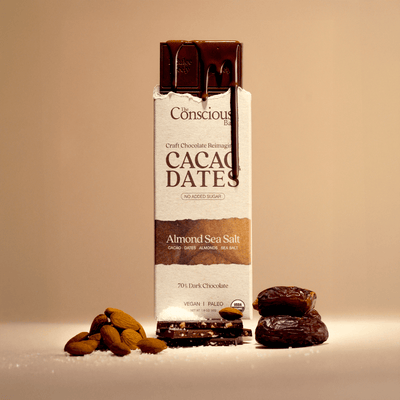
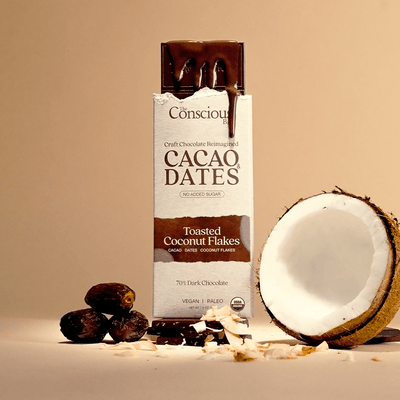
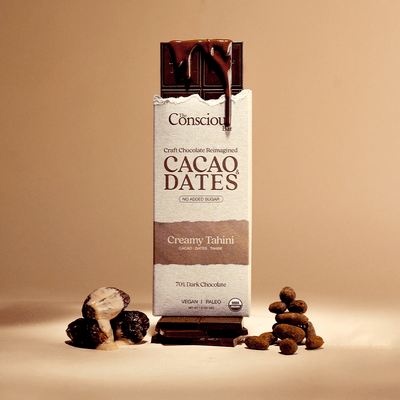
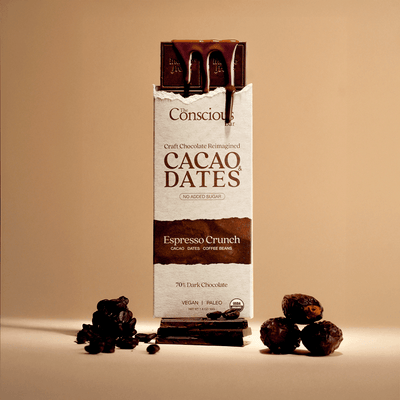
Sweetness isn’t the enemy. Refined sweetness without support is.
When comparing whole-food sweeteners like dates, honey, maple syrup, and coconut sugar, the difference comes down to what your body receives along with the sugar.
And dates deliver more than any other option.
Dates Are a Nutrient-Dense Natural Sweetener
Dates are naturally rich in vitamin B6, potassium, magnesium, copper, and manganese, along with smaller amounts of calcium, iron, zinc, and selenium. They also contain powerful antioxidants that help protect cells from oxidative stress (Macular Hope, 2024).
Most liquid sweeteners lose these compounds during processing. Dates retain them because they remain a whole food, which matters for how the body processes them.
Fiber Is What Sets Dates Apart
One whole date provides approximately 1.8 grams of dietary fiber, while honey, maple syrup, and coconut sugar provide virtually none (Macular Hope, 2024).
Fiber slows digestion, helps regulate blood sugar response, and supports gut health — making dates a fiber-rich sweetener rather than an empty one.
This fiber content is why dates tend to have a low to moderate glycemic impact, providing steadier energy without rapid spikes (The Date Hut, 2024).
Dates vs Honey, Maple Syrup, and Coconut Sugar
When people talk about “better” sweeteners, they often focus on sweetness alone. But the real difference shows up when you compare fiber, blood sugar stability, minerals, antioxidants, and how these sweeteners function in real food.
Fiber Content
Dates: Contain approximately 1.8 grams of fiber per date, which helps slow digestion and reduce how quickly sugar enters the bloodstream. This fiber is part of the fruit’s natural structure and remains intact whether dates are eaten whole or blended into paste.
Honey, Maple Syrup & Coconut Sugar: These sweeteners contain virtually zero fiber. Without fiber, sugars are absorbed more quickly, leading to faster increases in blood glucose levels (Macular Hope, 2024).
Fiber is one of the biggest reasons dates behave differently in the body compared to syrups or granulated sugars.
Blood Sugar Stability
Dates: Thanks to their fiber content, dates have a low to moderate glycemic impact, providing steady energy without sharp spikes (The Date Hut, 2024).
Honey & Maple Syrup: Both have a moderate glycemic index, meaning they release glucose more rapidly and can contribute to quicker energy fluctuations.
Coconut Sugar: Often marketed as “lower GI,” coconut sugar may cause a slightly slower rise in blood sugar, but without fiber, it still lacks the buffering effect that makes dates unique.
Blood sugar stability isn’t about avoiding sweetness. It’s about pairing sugar with fiber and structure.
Mineral Content
Dates: Provide meaningful amounts of Potassium, Magnesium, Copper, Manganese, and Vitamin B6. They also contain smaller amounts of calcium, iron, zinc, and selenium (Macular Hope, 2024).
Honey: Contains trace minerals, but amounts vary widely depending on floral source.
Maple Syrup: Provides some manganese, but little else nutritionally.
Coconut Sugar: Contains small and inconsistent mineral amounts that vary by processing method.
Dates deliver minerals your body actually uses, not just sweetness with trace nutrients.
Antioxidants
Dates: Rich in polyphenols and carotenoids, including lutein and zeaxanthin. These compounds help protect cells from oxidative stress and support long-term eye and cellular health (Macular Hope, 2024). Regular consumption has been linked to reduced risk of cataracts and macular degeneration (Macular Hope, 2024).
Honey: Antioxidant levels vary depending on floral source and processing.
Maple Syrup & Coconut Sugar: Contain minimal antioxidant activity compared to whole fruits.
Antioxidants are another reason dates function as more than a sweetener.
Taste & Function in Real Food
Dates: Have a naturally caramel-like flavor, richness, and texture. When chopped or blended into paste, they add sweetness and structure — improving mouthfeel, satiety, and overall eating experience.
Honey, Maple Syrup & Coconut Sugar: These sweeteners provide sweetness but are generally one-note, contributing little beyond flavor.
Dates enhance both taste and texture, making them uniquely suited for bars, baked goods, sauces, and everyday fueling.
Versatility Without Refinement
Dates can be eaten whole, chopped, or blended into paste, adding sweetness, texture, and structure to food. They work across bars, sauces, baked goods, and everyday fueling without requiring industrial processing (The Date Hut, 2024).
The Bottom Line
Dates aren’t sugar-free.
They’re fiber-rich, mineral-dense, and metabolically supportive.
They sweeten food and support your body at the same time.
That’s why dates aren’t just a sweetener…they’re fuel.
Sources
Macular Hope. The Surprising Health Benefits of Dates (2024).
https://macularhope.org/health-benefits-of-dates-a-sweet-superfood-for-a-healthy-life/
The Date Hut. Natural Sweeteners: Which One Wins? (2024).
https://thedatehut.co.uk/2024/12/28/natural-sweeteners-which-one-wins/