The label tells you what was left out. The ingredient list tells you what went in.
"No added sugar" has become one of the most common claims on health food packaging. It sounds like a clear positive. And as a regulatory definition, it is accurate.
But the claim is narrow, it only describes what was removed from a product. It says nothing about what replaced it, how calorie-dense the product is, or whether natural sugars are present in significant amounts.
This guide explains what "no added sugar" and "sugar-free" actually mean under FDA guidelines, what these labels can still mask, and how to read a label more completely.
What Do These Labels Actually Mean?
The FDA defines these two claims differently and the difference matters.
"Sugar-free"
A product can be labeled sugar-free if it contains less than 0.5 grams of total sugar per serving. This is a measure of what is in the product.
"No added sugar"
This claim means that no sugar or sugar-containing ingredient (such as table sugar, syrups, honey, or concentrated fruit juice) was added during manufacturing or packaging.
Critically: naturally occurring sugars from ingredients are still permitted. A product can carry this label and still contain substantial amounts of sugars present in its ingredients. They just were not added separately.
The FDA also requires that products using this claim display a "not a low-calorie food" disclaimer if applicable. An acknowledgment that the label does not imply reduced calories.
What "No Added Sugar" Can Still Mask
Three categories of nutritional considerations are not captured by this label.
High natural sugar from permitted ingredients
Fruit juice concentrates, dried fruit pastes, and syrups are not "added sugars" by the FDA definition. They are ingredients. But they contain sugars that behave similarly to refined sugar in the body. A product sweetened with concentrated juice can still cause a significant
blood sugar response despite the "no added sugar" claim on the front.
Sugar alcohol substitutes
To retain sweetness without added sugar, many manufacturers use sugar alcohols: maltitol, erythritol, sorbitol, and xylitol are common in chocolate. These provide sweetness with fewer digestible carbohydrates, but are only partially absorbed by the digestive system.
Partial absorption is what causes their well-documented side effects: bloating, gas, and digestive discomfort, particularly in larger amounts. Erythritol also produces a notable cooling sensation as it dissolves. An effect that can conflict with the expected texture of chocolate.
Calorie density from added fats
Sugar provides both sweetness and structural volume in chocolate. When sugar is removed, fat is often used to restore texture. Fat contains 9 calories per gram, compared to 4 for sugar.
Some reformulated "no added sugar" chocolate bars end up with similar or higher calorie density than their conventional counterparts. A tradeoff that the front-of-package claim does not reflect.
Why the Sweetener Source Matters
Not all sweeteners interact with the body the same way. The source of sweetness, not just the quantity, affects absorption rate, digestive response, and what other compounds come with it.
Refined sugar is processed to remove the fiber, minerals, and other compounds present in the original source. It absorbs quickly and provides no additional nutritional co-factors.
Sugar alcohols are only partially digested, which reduces their caloric impact but the same partial digestion is responsible for the gastrointestinal effects noted above.
Whole-fruit sweeteners retain their original fiber, potassium, magnesium, and polyphenols. The fiber present in a whole-food sweetener slows digestion, which research suggests may support a more gradual blood sugar response compared to isolated sweeteners.
A "no added sugar" label does not distinguish between these categories. The ingredient list does.
How to Read the Label More Completely
When you see "no added sugar" on a product, three additional checks give a more complete picture:
Check the sweetener source
Look past the front-of-package claim to the ingredient list.
Is the sweetener a whole food, a fruit concentrate, a syrup, or a sugar alcohol?
Each comes with different tradeoffs.
Check the ingredient list length
Shorter ingredient lists generally indicate less processing. A long list in a "no added sugar" product often means multiple substitutions were required to replicate the texture and flavor that sugar originally provided.
Check the fiber content
Whole-food sweeteners typically bring fiber with them. Isolated sweeteners and sugar alcohols generally do not. Fiber content can indicate whether the sweetness comes from a minimally processed source or a refined one.
The front of the package is a starting point. The ingredient list is the more complete answer.
Soft TCB Mention — Close
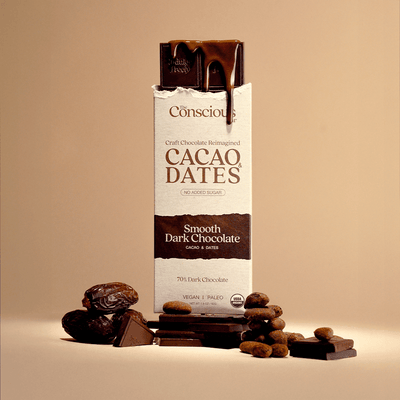
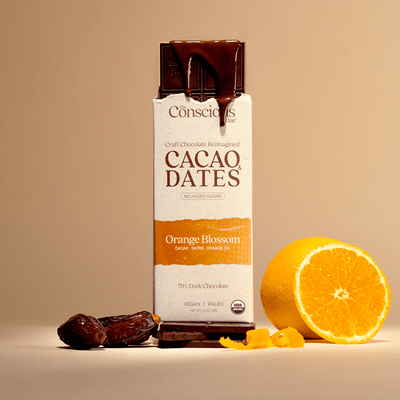
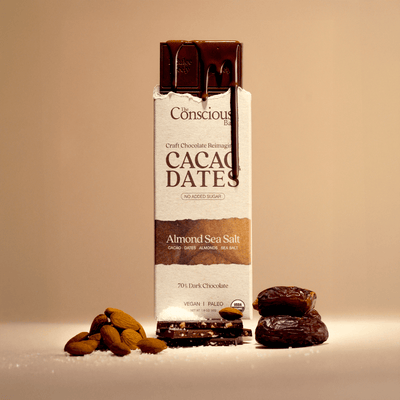
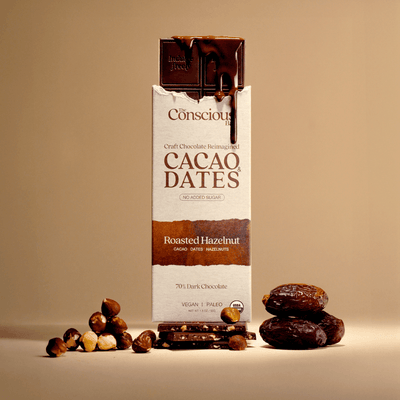
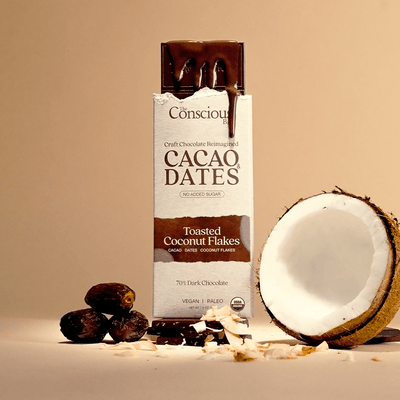
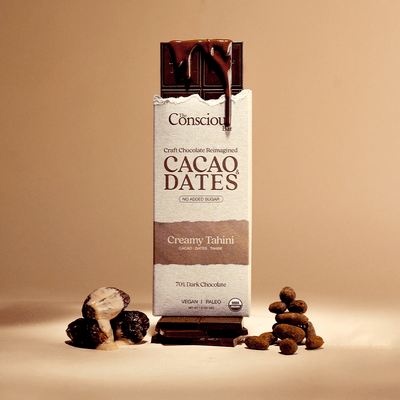
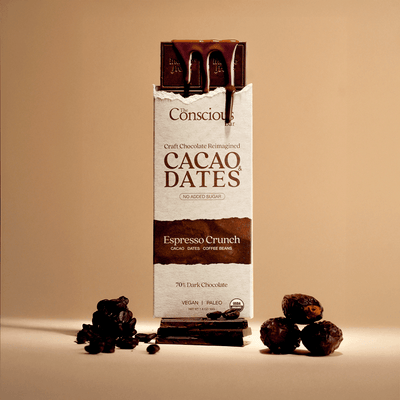
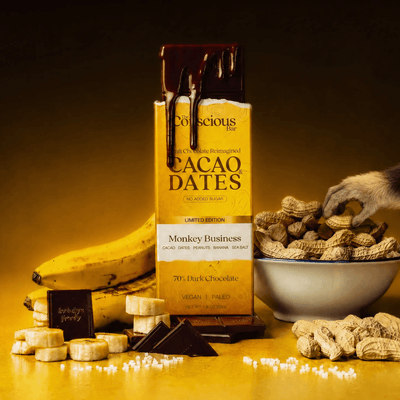
The Conscious Bar uses organic dates as its only sweetener.
Dates are a whole food, not a concentrate, not a sugar alcohol, not an isolated extract.
The fiber, minerals, and natural sweetness remain intact.
Full ingredient list: organic cacao, organic dates, organic cacao butter. Nothing added. Nothing substituted.
Sources (end of blog, linked URLs)
- FDA Food Labeling Guidance
- Sugar Alcohols and Gastrointestinal Effects
- Caloric Density: Fats vs. Carbohydrates
- Dietary Fiber and Glycemic Response
- Nutritional Profile of Dates
- Sugar alcohols and GI effects
- Caloric density
- Fiber and glycemic response
- Nutritional profile of dates