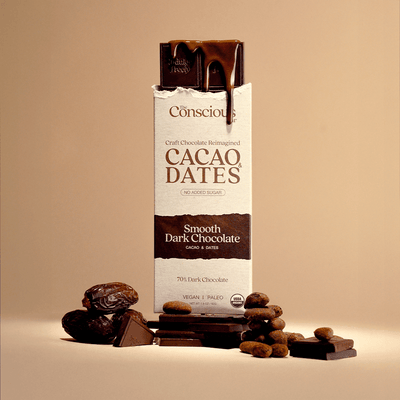
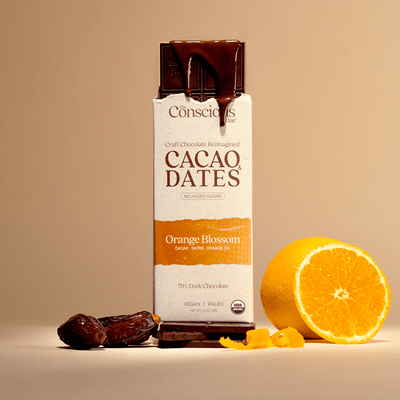
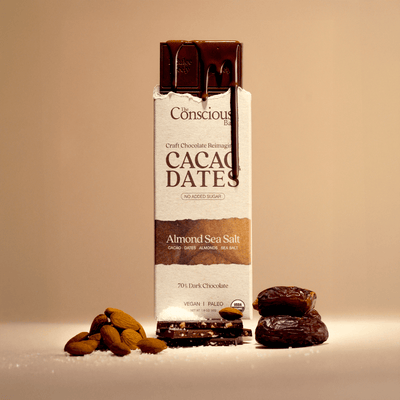
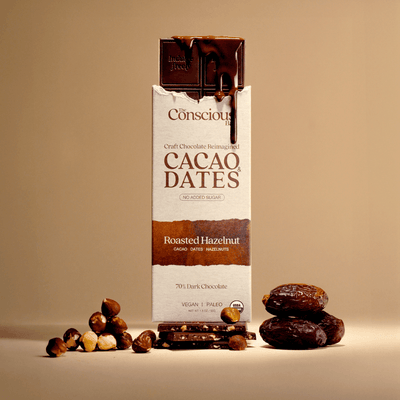
For years, chocolate has been framed as a “cheat,” a “sin,” or a reward that comes with consequences. This mindset didn’t appear by accident. It came from ultra-processed ingredients, refined sugar overload, and a disconnect between pleasure and nourishment.
But when chocolate is made differently, guilt-free stops being a marketing trick and represents a shift toward chocolate that is actually beneficial for your body, the planet, and your mental health.
1. Guilt-Free Starts With Nutritional Reality
High-cacao chocolate (70%+) naturally contains:
- Flavonoids and polyphenols that help reduce oxidative stress
- Magnesium, iron, and trace minerals
- Fiber that slows sugar absorption
When refined sugar dominates a bar, these benefits are overshadowed. When cleaner formulations are used, chocolate behaves more like a functional food than candy.
2. Blood Sugar, Crashes, and the “After-Feeling”
Refined sugar causes rapid spikes in blood glucose, often followed by crashes that feel like:
- Fatigue
- Irritability
- Cravings for more sugar
Lower-glycemic sweetening strategies and whole-food ingredients help stabilize this response, changing how chocolate feels after you eat it and not just while you’re eating it.
3. The Psychology of Guilt and Shame Around Food
Research shows that guilt around eating can actually backfire:
- People who associate chocolate with guilt tend to overeat or feel out of control
- Guilt elevates cortisol, a stress hormone linked to weight gain and poor metabolic health
- Those who view chocolate as celebratory or neutral show better long-term eating behaviors
In short: guilt doesn’t protect your health, rather it often undermines it.
4. Chocolate, Mood, and the Brain
Cacao naturally contains compounds like:
- Tryptophan (a serotonin precursor)
- Phenylethylamine (linked to pleasure and focus)
When eaten without stress or shame, chocolate can support mood rather than trigger a mental tug-of-war.
5. Ethical and Environmental Guilt Is Real Too
For many consumers, guilt-free also means:
- Fair compensation and safe working conditions for farmers
- No child labors
- Farming practices that protect biodiversity
- Lower environmental impact through thoughtful ingredient choices
When those boxes are checked, chocolate aligns not just with the body, but with personal values.
______________________________________________________________________________________________
Guilt-free doesn’t mean pretending chocolate is a salad. It means creating chocolate that:
- Works with your biology
- Respects your mental relationship with food
- Honors people and the planet
That’s not a gimmick. That’s evolution.
______________________________________________________________________________________________
Sources