You already know dark chocolate has antioxidants. But cacao's mineral profile is one of the most underreported parts of its nutritional story. Magnesium, iron, potassium; these aren't trace amounts. In quality dark chocolate, they show up in numbers that matter.
Magnesium: The Mineral Most Adults Are Short On
Magnesium doesn't get the attention it deserves. It quietly drives over 300 biochemical reactions in your body…energy metabolism, protein synthesis, muscle contraction and relaxation, nerve signaling, and more. It also plays a direct role in regulating sleep quality and supporting heart rhythm.
Despite how essential it is, more than half of US adults don't hit their recommended daily intake (NHANES data, PMC 2024). The standard American diet (heavy in processed foods and refined grains) is low in the whole food sources where magnesium actually lives.
Cacao is one of those sources. Dark chocolate at 70–85% cacao solids delivers approximately 228mg of magnesium per 100g, over 50% of the daily reference value for adults. Research published in PubMed confirms dark chocolate is "an excellent source of magnesium" (Grembecka & Szefer, Food Chemistry, 2013).
What that means in practice: A few squares of quality dark chocolate contributes meaningfully to a mineral that most people aren't getting enough of through the rest of their diet.
Iron: The Oxygen Carrier and the Pairing That Matters
Iron is essential for building hemoglobin, the protein in red blood cells that carries oxygen from your lungs to the rest of your body. Low iron is one of the most common nutritional deficiencies globally.
Cacao contains non-heme iron, the plant-based form of iron. Non-heme iron is generally absorbed at a lower rate than heme iron (the form found in animal products), but its absorption is enhanced by one key factor: vitamin C.
According to NIH dietary iron data (StatPearls, NCBI), consuming vitamin C-rich foods alongside non-heme iron sources meaningfully increases absorption. Cacao also appears to be a "significant source of moderately bioavailable iron" according to a study in the British Journal of Nutrition (Cercamondi et al.).
What that means in practice: Pairing dark chocolate with berries, citrus, or other vitamin C sources isn't just a flavor decision. It's one that may help your body absorb more of the iron the cacao is providing.
Potassium: The Mineral That Works Against Sodium
Potassium is one of the primary electrolytes that keeps your cardiovascular system functioning normally. It regulates fluid balance, supports nerve signal transmission, and counterbalances the blood-pressure-raising effects of sodium.
Dark chocolate at 70–85% cacao delivers approximately 715mg of potassium per 100g around 21% of the daily value (USDA FoodData Central). That's a meaningful contribution from a food most people categorize purely as a treat.
A 2022 systematic review and meta-analysis published in Nutrients (PMC9265772) found that cocoa consumption for two weeks or more was associated with modest reductions in both systolic and diastolic blood pressure. The effect is attributed primarily to flavanols, but the mineral profile, including potassium, is part of the broader picture.
What that means in practice: The cardiovascular support observed in cocoa research isn't from any single compound. It's the combination of flavanols, minerals, and antioxidants working together, which is exactly what you get from minimally processed dark chocolate.
Why Processing Changes Everything
These minerals don't get added to cacao, they're already there. The question is whether the rest of the bar gets in their way.
Heavily processed chocolate, made with refined sugar, added emulsifiers, and low cacao percentages, dilutes the mineral concentration per serving. You end up with a product that carries the name "chocolate" but delivers a fraction of what the cacao originally contained.
The simplest way to protect the mineral density of cacao is to keep the ingredient list short. Fewer additions mean more of the cacao's nutritional profile stays intact.
How The Conscious Bar Approaches This
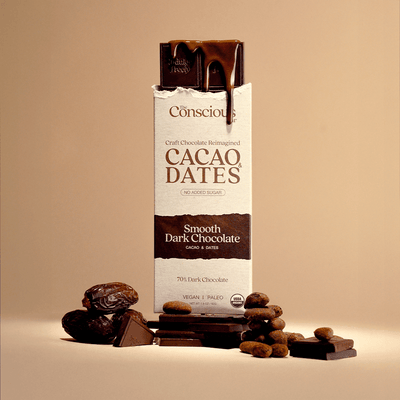
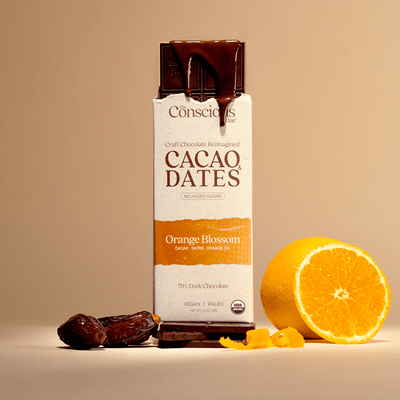
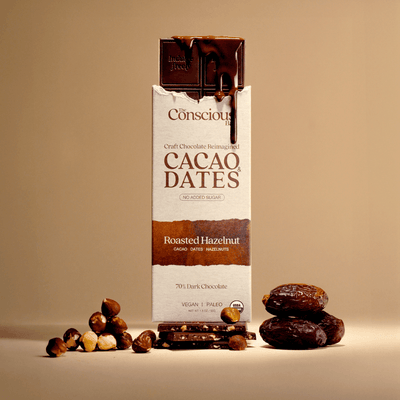
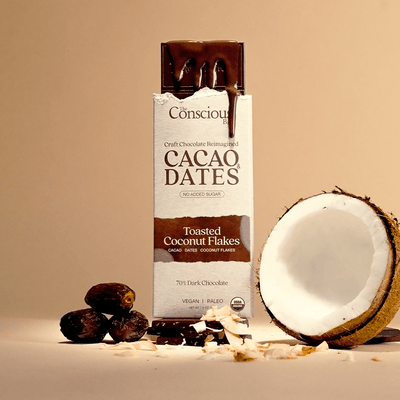
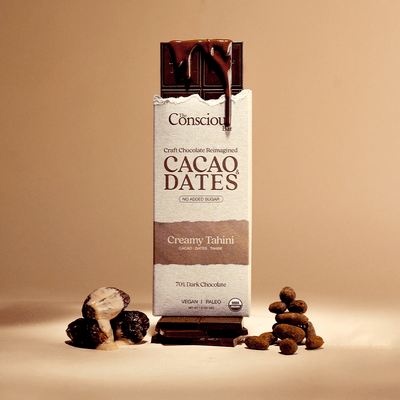
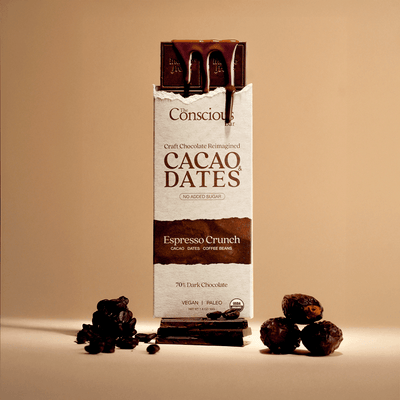
The Conscious Bar is made with 2 superfoods: organic cacao and organic dates. No refined sugar. No emulsifiers. No fillers.
The minerals covered in this post, magnesium, iron, and potassium, come from the cacao itself. We don't add anything that works against what's already there.
Sources
All sources are peer-reviewed or from institutional/government databases.
- Magnesium — PubMed: Grembecka & Szefer, Food Chemistry, 2013. "Mineral essential elements for nutrition in different chocolate products."
- Magnesium deficiency prevalence — PMC/NHANES: "Magnesium Depletion Score and Metabolic Syndrome in US Adults." PMC11570370.
- Iron — NIH/NCBI StatPearls: "Dietary Iron." National Library of Medicine.
- Iron bioavailability — PubMed: Cercamondi et al., British Journal of Nutrition, 2009. "Iron bioavailability of cocoa powder as determined by the Hb regeneration efficiency method."
- Potassium/dark chocolate mineral data — USDA FoodData Central: Chocolate, dark, 70-85% cacao solids.
- otassium and blood pressure — PMC/Nutrients: "Effect of Cocoa Beverage and Dark Chocolate Consumption on Blood Pressure in Those with Normal and Elevated Blood Pressure: A Systematic Review and Meta-Analysis." PMC9265772.
- Dark chocolate antioxidant/mineral analysis — PMC: "Antioxidant Activity and Multi-Elemental Analysis of Dark Chocolate." PMC9141620.