









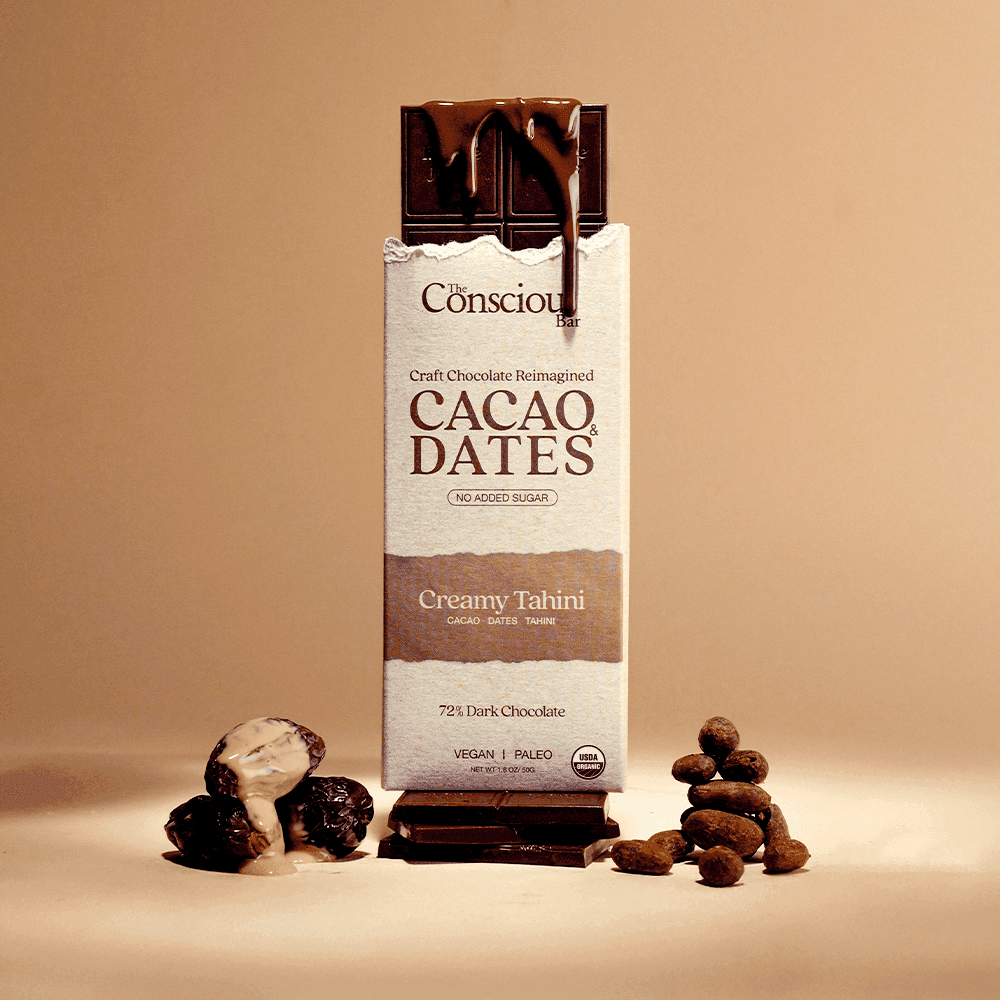



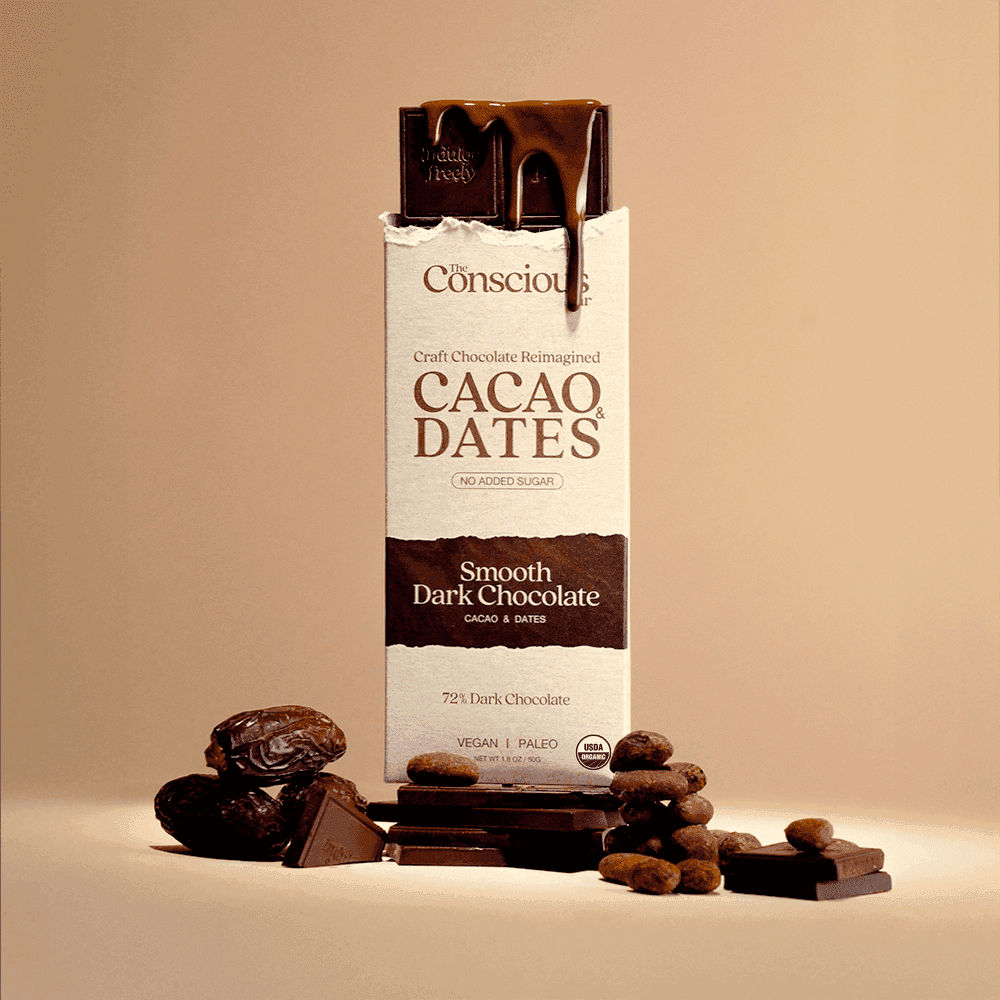


Dates are one of the sweetest whole foods on earth. Pick one up, bite into it, and your brain immediately registers: this is candy-level sweet.
So, it's completely fair to wonder: does that sweetness come with a blood sugar spike to match?
The short answer: not the way you'd expect.
Despite their intense sweetness, dates behave very differently in your body than refined sugar. And the reasons why come down to what a date actually is, a whole food with a specific combination of fiber, sugar types, and plant compounds that change how your body absorbs and processes that sweetness.
Let's break it down.
The Fiber Buffer: Why Dates Don't Hit Like Sugar
The single biggest reason dates don't spike your blood sugar the way table sugar does is fiber.
Dates contain roughly 7 to 8 grams of dietary fiber per 100 grams. That's a significant amount especially compared to refined sugar, which contains zero.
Here's why that matters: when you eat a date, the soluble fiber inside it forms a gel-like substance in your digestive tract. That gel physically slows down how quickly carbohydrates are broken down and absorbed into your bloodstream.
Think of it like a speed bump. The sugar is still there but instead of flooding your bloodstream all at once, it enters gradually. Your body gets time to process the energy at a manageable pace.
Refined sugar doesn't have this buffer. There's no fiber, no structure, nothing to slow the absorption down. The sugar hits fast, your blood glucose spikes, your body scrambles to respond with insulin, and then you crash. That's the "sugar rollercoaster" most people know all too well.
Dates skip that entire cycle, not because they're low in sugar, but because the fiber changes how that sugar is delivered.
Where Dates Land on the Glycemic Index
The glycemic index (GI) is a scale from 0 to 100 that measures how quickly a food raises your blood sugar. The higher the number, the faster the spike.
For reference:
- Pure glucose sits at 100 — it's the benchmark, the fastest possible spike.
- Table sugar (sucrose) comes in around 65 — medium range.
- Whole dates typically fall between 42 and 55, depending on the variety.
Anything below 55 is classified as "low glycemic." That puts most whole date varieties in the same neighborhood as foods like apples, lentils, and chickpeas, not exactly the company most people would expect for something that tastes like caramel.
A clinical trial measuring 17 different date varieties found that the average GI across all of them was approximately 55, with some varieties scoring as low as 43. Importantly, none of the date varieties tested caused significant post-meal blood sugar spikes in healthy subjects. (Alkaabi et al., Nutrition Journal, 2011; PubMed, 2018)
One thing to keep in mind: while dates have a low-to-moderate GI, their glycemic load (GL) — which factors in the amount of carbohydrate per serving — lands in the medium range because dates are naturally dense in carbohydrates. This is why portion matters. A couple of dates as a snack or as a sweetener in a recipe is very different from eating an entire bag in one sitting.
It's Not Just Fiber. It's the Type of Sugar
Here's something most people don't realize: not all sugars behave the same way in your body.
Dates contain a natural blend of three sugars: glucose, fructose, and sucrose. Each of these has a different glycemic response.
Glucose is the fastest, it's what the GI scale is benchmarked against (GI of 100). Sucrose (table sugar) is a 50/50 split of glucose and fructose, landing around a GI of 65. But fructose on its own has a GI of roughly 19 to 25, significantly lower than either glucose or sucrose.
Because dates contain a meaningful proportion of fructose alongside glucose and sucrose, the overall glycemic impact is naturally moderated. The blend of sugar types — combined with the fiber and whole-food structure — means your body doesn't process a date the way it processes a spoonful of table sugar, even if they taste comparably sweet.
Sustained Energy, Not a Crash
This combination of fiber, mixed sugar types, and whole-food structure gives dates a unique energy profile.
When you eat refined sugar, the pattern is familiar: a rapid surge of energy followed by a crash that leaves you tired, foggy, and reaching for more sugar. That's the spike-and-crash cycle — and it's driven by how quickly refined sugar enters your bloodstream without anything to slow it down.
With dates, the energy release is more gradual. The fiber delays absorption. The fructose component has a lower glycemic impact. And the polyphenols (natural plant compounds) found in dates may further support steadier blood sugar management.
The result: you get the sweetness and the energy without the dramatic drop-off. No crash. No brain fog. No 3pm slump.
The Power Pairing
One more thing worth knowing: dates become even more blood-sugar-friendly when paired with protein or healthy fats.
Combining dates with foods like nuts, nut butter, seeds, or Greek yogurt further slows gastric emptying (the rate at which food leaves your stomach and enters your intestines.) This delays sugar absorption even more and can reduce the overall glycemic impact of the snack.
So a date stuffed with almond butter isn't just delicious, it's a strategically smart snack from a blood sugar perspective.
The Bottom Line
Dates are intensely sweet. That's real. But sweetness alone doesn't tell you how a food behaves in your body.
What matters is the full picture: the fiber, the sugar composition, the whole-food matrix, and the glycemic response. And when you look at that full picture, dates are remarkably different from refined sugar.
They sit in the low-to-moderate range on the glycemic index. They come packaged with 7–8g of fiber per 100g that actively slows sugar absorption. They contain a blend of sugars that naturally moderates the blood sugar response. And they deliver energy gradually and without the crash.
That's what makes them one of the most underrated sweeteners in the entire food system.
Sources
- AlGeffari, M.A. et al. - Glycemic indices, glycemic load and glycemic response for seventeen varieties of dates grown in Saudi Arabia. PubMed, 2016.
- Al-Farsi, M.A. & Lee, C.Y. — Nutritional and functional properties of dates: a review. Critical Reviews in Food Science and Nutrition, 2008.
- Oregon State University / Linus Pauling Institute — Glycemic Index and Glycemic Load
- California Dates Commission — Nutrition Information
- Mayo Clinic — Low-Glycemic Index Diet: What's Behind the Claims?
- Glycemic Index Foundation / University of Sydney — Dates
- Joslin Diabetes Center — How Does Fiber Affect Glucose Levels?
- VA Whole Health Library — Glycemic Index
- Healthline — 8 Proven Health Benefits of Dates
- Zeelab Pharmacy — Can Dates Increase Blood Sugar?
- ScienceDirect — Effect of date consumption on glycemic outcomes: A systematic review
- PubMed Central — Effects of date palm fruits on glycaemic and lipid control
- PubMed Central — Date fruit consumption and metabolic markers


Leave a comment
This site is protected by hCaptcha and the hCaptcha Privacy Policy and Terms of Service apply.