









If you’ve ever turned over a chocolate bar and seen the words “natural flavor” on the ingredient list, you probably assumed it was a good thing.
After all, “natural” sounds safe. Clean. Better than artificial.
But the reality is more nuanced.
Here’s what “natural flavor” actually means and what it doesn’t.
What Is a Natural Flavor?
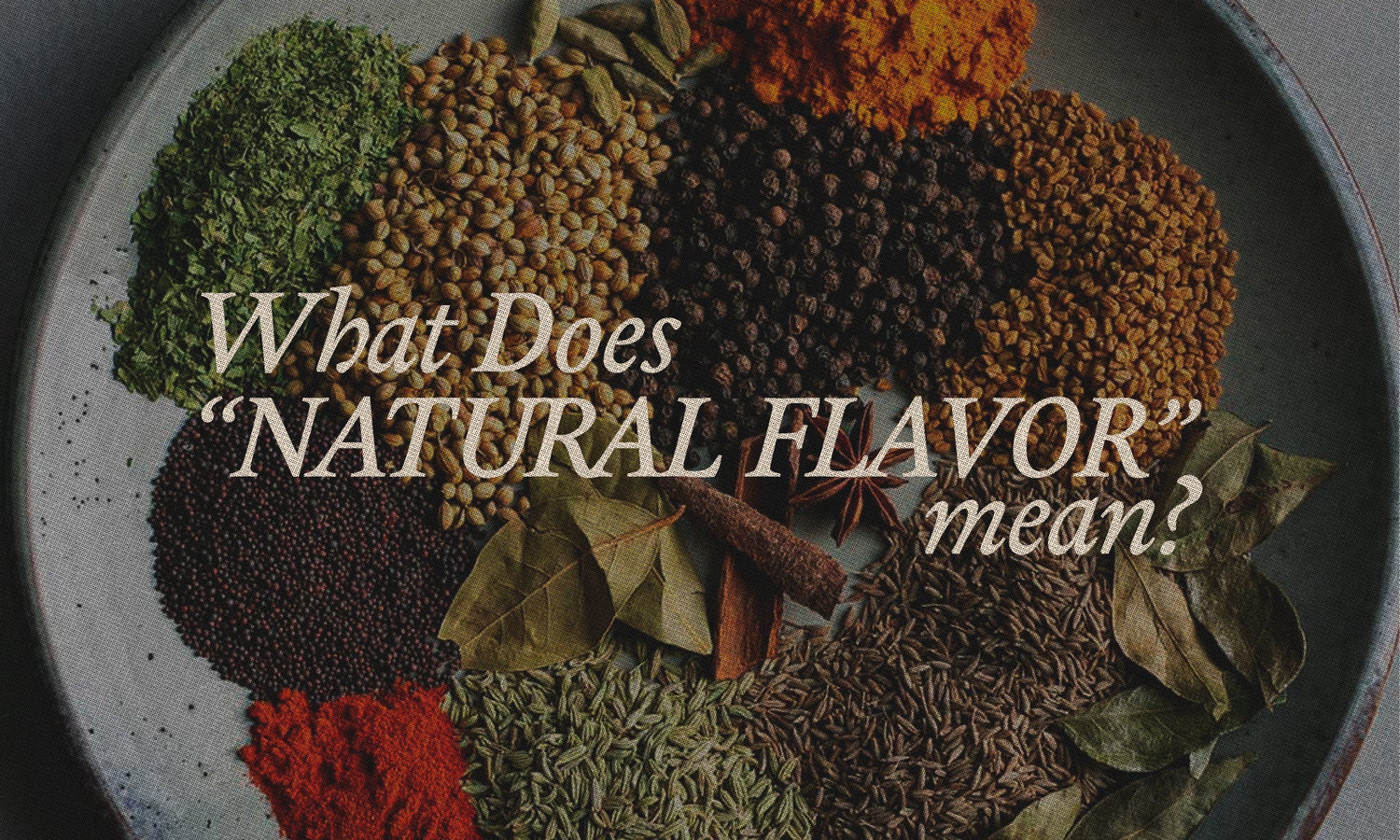
According to the FDA, natural flavors are substances derived from plant or animal materials such as:
- Fruits
- Vegetables
- Spices
- Herbs
- Bark
- Roots
- Dairy
- Edible yeast
They're extracted through processes like heating, roasting, distilling, or enzymatic treatment.
The key distinction: the flavor must originate from a natural source, rather than being fully synthesized in a lab.
That’s where the clarity ends.
Why the Term Is So Broad
“Natural flavor” is legally allowed to represent a proprietary blend.
Manufacturers are not required to disclose the specific compounds inside that blend, unless it contains one of the top major allergens (like milk, soy, peanuts, etc.).
That means:
- The exact source may not be clear
- The processing aids may not be listed
- The stabilizers or solvents used may not appear on the label
The phrase can represent dozens of individual compounds combined into a single flavor system.
What’s Actually Inside a Natural Flavor Blend?
While the original source must be natural, the final mixture can contain incidental additives such as:
- Propylene glycol (solvent)
- Preservatives
- Emulsifiers
- Stabilizers
In some cases, these additives can make up 80–90% of the final flavor mixture.
These ingredients do not need to be individually listed.
“Natural Chocolate Flavor” Isn’t Always Cocoa
This surprises many people.
“Natural chocolate flavor” may not come directly from cocoa beans. It can be a blend of other natural extracts (such as vanilla or malt derivatives) designed to replicate or enhance chocolate notes.
It’s about taste, not necessarily more cacao.
Are Natural Flavors Safe?
Generally, yes.
They are classified as GRAS (Generally Recognized as Safe) by the FDA for the general population.
However:
- They offer no meaningful nutritional value
- They may contain undisclosed allergens (outside required disclosures)
- Some individuals report sensitivities (migraines, digestive discomfort, dizziness)
- They are engineered to enhance palatability, which may influence appetite and
- cravings
For vegans or vegetarians, it’s also worth noting that natural flavors may sometimes be animal derived.
Are There Any Benefits?
The primary benefit is consistency and taste enhancement.
Natural flavors help manufacturers:
- Standardize flavor across batches
- Improve aroma
- Intensify sweetness perception without adding sugar
Some extracts (like vanillin or cinnamaldehyde) may retain trace antioxidant or anti-inflammatory properties, but these are typically present in very small amounts.
The Bigger Question: Transparency
The issue with “natural flavor” isn’t necessarily safety. It’s transparency.
When a label says “natural flavor,” you don’t truly know:
- What exact compounds are used
- How they were processed
- What stabilizers support them
For consumers who prioritize simplicity, shorter ingredient lists often mean fewer unknowns.
Final Takeaway
“Natural flavor” doesn’t automatically mean unhealthy.
But it doesn’t mean whole, simple, or minimally processed either.
It’s a regulatory term, not a purity guarantee.
And when it comes to food labels, clarity is power.



Leave a comment
This site is protected by hCaptcha and the hCaptcha Privacy Policy and Terms of Service apply.