Why One Square Is Enough to Make a Difference
Dark chocolate has had a reputation for being the "healthier" treat for years. But that reputation is usually backed by vague claims, antioxidants, good fats, better than milk chocolate.
What's rarely explained is what's actually happening inside your body when you eat it consistently.
The answer is more interesting than the marketing.
Here's a plain-language breakdown of what the science shows and why it matters which chocolate you choose.
What It Does for Your Heart
Inside your blood vessels, there's a lining called the endothelium. One of its jobs is to regulate how relaxed or constricted your vessels are, which directly affects blood pressure and circulation.
Flavanols (the main antioxidant compounds in cacao) trigger the production of nitric oxide. Nitric oxide signals your vessel walls to relax and open wider, improving blood flow and easing pressure.
A Cochrane systematic review that analyzed 35 clinical trials found that regular consumption of dark chocolate and cocoa products was associated with a modest reduction in blood pressure compared to control groups.
What that means for you: A daily square of high-quality dark chocolate may support healthy blood pressure and circulation over time, especially when it replaces something less beneficial in your routine. (Cochrane, 2017)
What It Does for Your Gut
Most people think of their gut as just digestion. But your gut microbiome (the community of bacteria living in your digestive tract) plays a role in everything from immunity to mood to how your body processes food.
Here's where dark chocolate gets interesting. Most of cacao's polyphenols are not absorbed in the upper digestive tract. Instead, they travel down to the colon, where they interact with your gut bacteria directly. Research published in the journal Nutrients found that cacao flavanols act as a prebiotic, feeding and promoting the growth of beneficial gut bacteria, while reducing the presence of less desirable strains.
What that means for you: Every square of dark chocolate is quietly supporting the ecosystem inside your gut, which influences far more than digestion alone. (PMC / NIH, Nutrients, 2020)
What It Does for Your Mood
Cacao contains several compounds that interact with your nervous system. Among the most studied: it contains precursors to serotonin, a neurotransmitter that plays a key role in mood regulation, and has been linked to reduced levels of cortisol, the hormone your body releases in response to stress.
A randomized controlled study published on PMC/NIH found that daily consumption of polyphenol-rich dark chocolate significantly reduced salivary cortisol levels in participants over a four-week period. The effect on mood scores was more modest and warrants further research, but the cortisol reduction was statistically significant, which is meaningful for anyone dealing with daily stress.
What that means for you: A small piece of dark chocolate in the afternoon may help take the edge off, not because chocolate is magic, but because the compounds inside it interact with real physiological stress pathways. (PMC / NIH, Nutrients, 2019)
What It Does for Your Brain
The same flavanols that support blood vessel function in your heart also affect circulation in your brain. Increased cerebral blood flow means more oxygen and nutrients reaching areas of the brain involved in focus, memory, and decision-making.
A 2023 fMRI study published on PMC/NIH found that participants who consumed cacao polyphenol-rich dark chocolate showed more efficient brain activity during cognitive tasks. Meaning, their brains accomplished the same work with less effort.
A separate randomized trial found that habitual dark chocolate intake was associated with improved performance on tests of memory and attention.
What that means for you: The mental clarity you feel after a piece of dark chocolate isn't just psychological. There's a measurable, physical reason it's happening. (PMC / NIH, Nutrients, 2023; PMC / NIH, 2019)
What's Actually Inside: The Mineral Profile
Beyond flavanols, high-quality dark chocolate is a surprisingly dense source of essential minerals. Per 100g of 70–85% dark chocolate, according to the USDA Nutrient Database:
- Magnesium (approximately 228mg): supports muscle recovery, nerve function, and sleep quality
- Iron (approximately 12mg): helps carry oxygen through the body and supports energy levels
- Zinc (approximately 3.3mg): supports immune function and cellular health
A realistic daily serving is around 20–30g, so actual intake per square will be proportionally smaller, but consistent daily consumption adds up in a meaningful way. (USDA Nutrient Database, fdc.nal.usda.gov)
How to Choose the Right Dark Chocolate
Everything above only applies if you're eating the right chocolate. Not all dark chocolate is created equal and the differences in the ingredient list are what determine whether you're getting these benefits or not.
Here's what to look for:
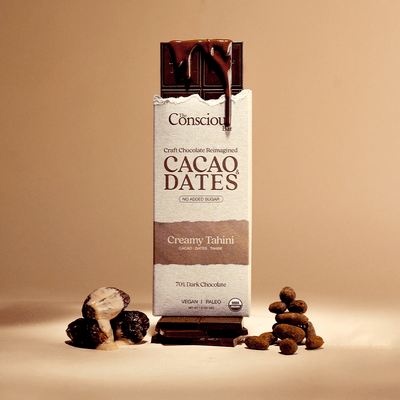
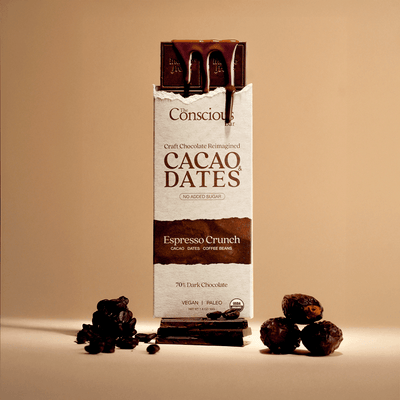
- Cacao content of 70% or above: this is the threshold at which flavanol content becomes meaningful
- No refined sugar: refined sugar works against the benefits cacao provides. Look for bars sweetened with whole food sources, or unsweetened
- Short ingredient list: the fewer the ingredients, the less processing the cacao has been through
- No emulsifiers or fillers: common additives like soy lecithin and artificial flavors don't contribute to health and in some cases may counteract cacao's benefits
And here's what to watch out for:
- "Dark chocolate" labels with 50–60% cacao: these often still contain significant amounts of added sugar
- "Sugar-free" dark chocolate: usually replaced with sugar alcohols, which have their own digestive side effects
- Long ingredient lists: if you can't identify every ingredient, it's worth questioning what's in there
The simplest rule: the closer to whole cacao the chocolate is, the more your body actually receives from it.
The Bottom Line
One square of quality dark chocolate, eaten daily, is genuinely doing something, for your heart, your gut, your mood, your brain, and your micronutrient intake. It's one of the very few indulgences where the science and the craving point in the same direction.
The only variable is what's in the chocolate you choose.
So When Should You Eat It?
There's no magic window. But there are moments in the day where one square fits naturally and actually does something useful:
- With your morning coffee: the compounds layer well together, and the theobromine can smooth out caffeine's rougher edges
- After lunch: before the afternoon energy dip hits, not after you're already fighting it
- Around 3pm: that universal moment when focus starts to drift and you want something
- After dinner: a small, intentional close to the day instead of reaching for something else
The point isn't to be rigid about it. It's to make it consistent enough that it becomes a habit, because that's when the longer-term effects start to accumulate.
Sources
- Effect of cocoa on blood pressure — Cochrane Systematic Review, Ried et al., 2017
- Cocoa Polyphenols and Gut Microbiota Interplay — PMC / NIH, Nutrients, 2020
- Effect of Polyphenol-Rich Dark Chocolate on Salivary Cortisol and Mood — PMC / NIH, Nutrients, 2019
- Cacao Polyphenol-Rich Dark Chocolate and Brain Activity — PMC / NIH, fMRI Study, 2023
- Dark Chocolate, Cognitive Function, and Nerve Growth Factors — PMC / NIH, 2019
- Dark Chocolate 70–85% Cacao — USDA Nutrient Database