If someone told you to eat chocolate before your workout, you'd probably laugh. But if they told you it might help your blood vessels work more efficiently, deliver more oxygen to your muscles, and give you a steady energy lift without the crash… you'd probably listen.
That's not a marketing pitch. It's what a growing body of research on cacao is starting to show.
Here's what we know, what we don't, and why the type of chocolate you eat matters more than almost anything else.
What Makes Cacao Different From Regular Chocolate
Before we get into the exercise connection, it's worth understanding what's actually in cacao.
Cacao beans are packed with compounds called flavanols, a type of plant antioxidant found in a handful of foods like tea, berries, and grapes. Cacao happens to be one of the richest sources on earth.
The problem is that most chocolate processing destroys flavanols. Roasting at high temperatures, alkalization (also called "dutching"), and the addition of sugar and fillers all reduce the flavanol content dramatically. By the time most chocolate bars reach the shelf, very little of what made the cacao beneficial is still intact.
That's why the type of chocolate matters enormously, something we'll come back to at the end.
The Blood Flow Connection
Here's where it gets interesting for exercise.
When you consume flavanols from cacao, your body uses them to produce something called nitric oxide. Nitric oxide is a molecule that signals the walls of your blood vessels to relax and widen, a process called vasodilation.
Why does this matter for working out? Because wider blood vessels mean more blood can flow through them. More blood flow means more oxygen and nutrients reaching your muscles while they're working. And more oxygen delivery to working muscles is, broadly speaking, what most pre-workout supplements are designed to achieve.
Researchers at the University of the West of Scotland published findings in a peer-reviewed journal showing that consuming dark chocolate (70% cacao or higher) was associated with improved exercise capacity in participants compared to a control group, and they identified improved cardiovascular function as the likely mechanism (Patel, 2015, Journal of the International Society of Sports Nutrition).
A separate study published in the European Journal of Nutrition found that flavanol-rich cacao was associated with improvements in blood vessel flexibility and reduced arterial stiffness, both markers of cardiovascular health that are relevant to how efficiently your body performs during exercise (Heiss et al., 2010).
And a 2024 prospective study published in PubMed Central found that two weeks of daily dark chocolate consumption in endurance runners was associated with a measurable decrease in pulse wave velocity, essentially, a sign that their arteries were working more efficiently (PMC11679228).
Researchers note that while these findings are promising, more long-term studies are needed to establish optimal timing and dosage. Most of the positive results have been observed in sedentary or recreationally active people, and results for competitive athletes have been more mixed.
Theobromine: The Energy Compound You've Probably Never Heard Of
Cacao contains caffeine, but in smaller amounts than coffee. What it has more of is theobromine, a closely related compound that most people have never heard of.
Theobromine is a mild stimulant that works differently from caffeine. It's absorbed more slowly, lasts longer in the body, and doesn't trigger the same sharp spike-and-crash cycle. Research published in Psychopharmacology has noted that theobromine may support alertness and mood with fewer of the jittery side effects associated with caffeine (Smit & Rogers, 2002).
For exercise purposes, this means a gentler, more sustained lift, which may be more useful than a short burst of intensity followed by a drop in energy mid-workout.
Magnesium and Muscle Recovery
Cacao is also one of the most magnesium-dense foods available. A single ounce of high-quality dark chocolate can contain around 15-20% of the recommended daily intake of magnesium, depending on the cacao percentage.
Magnesium is directly involved in muscle contraction and relaxation. It plays a role in energy production at the cellular level and has been studied for its potential to support muscle recovery after exercise. According to the National Institutes of Health (NIH Office of Dietary Supplements), magnesium contributes to normal muscle function and is involved in over 300 enzymatic reactions in the body, many of which are relevant to physical performance and recovery.
Low magnesium levels have been associated with muscle cramps, fatigue, and impaired exercise performance in some research contexts. While cacao alone isn't a magnesium supplement, it's a meaningful dietary source, particularly when consumed regularly.
What the Research Actually Says (And What It Doesn't)
We want to be honest here, because this is where a lot of wellness content goes wrong.
The research on cacao and exercise performance is genuinely interesting, but it's not conclusive. Most studies have been conducted on small groups, over short periods, and many focused on sedentary or recreationally active individuals rather than trained athletes. Results for competitive athletes specifically have been more variable.
One review of clinical trials published in Nutrients in 2019 (PMC6683266) found that cocoa and its polyphenols showed promising effects on exercise performance and post-exercise muscle recovery in some contexts, but noted that the evidence was inconsistent across studies and that more research was needed.
The honest summary: the mechanism is real and supported by the science. The flavanol-to-nitric oxide pathway is well-established. But "this will improve your performance by X%" is not a claim the research currently supports. What it does support is this: consuming high-quality, minimally processed cacao as part of a regular diet may support cardiovascular function, provide a sustained energy effect, and contribute meaningful amounts of magnesium, all of which are relevant to how your body performs and recovers.
The Part That Changes Everything: It Only Works With the Right Chocolate
This is the detail that most articles skip and it's the most important one.
The flavanols that drive all of these benefits are fragile. They're destroyed by heavy processing, high-heat roasting, and alkalization. They're diluted by sugar and additives. By the time most commercial chocolate reaches a store shelf, the flavanol content is a fraction of what it was in the raw cacao.
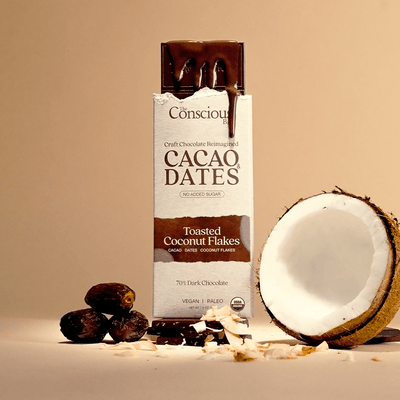
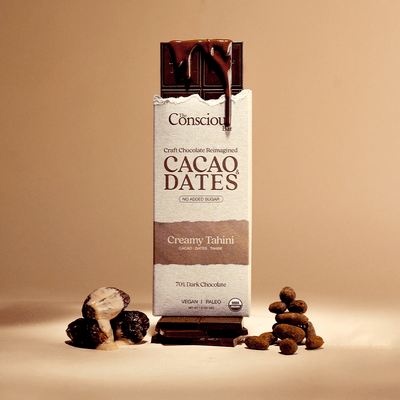
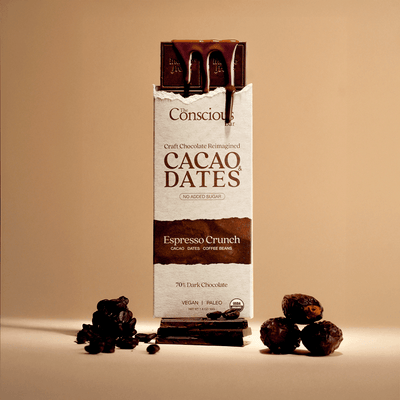
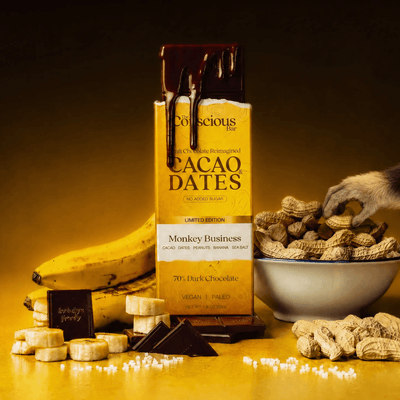
For the benefits discussed here to be relevant, you'd want to look for:
- 70% cacao or higher: the higher the percentage, the more room there is for actual cacao content
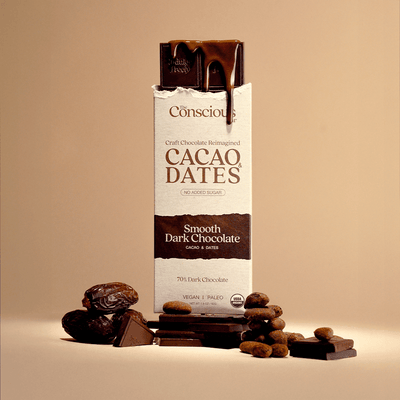
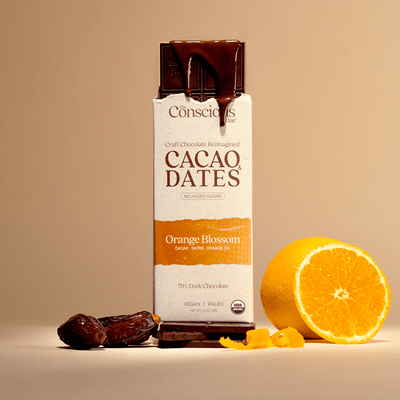
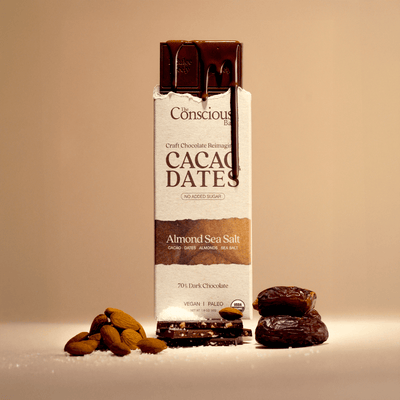
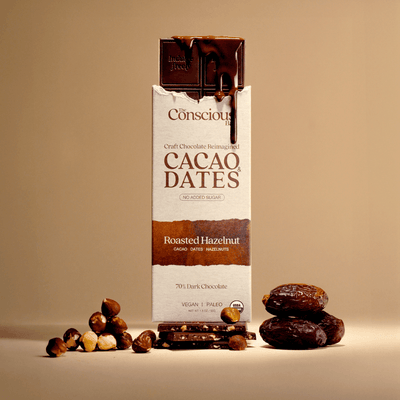
- Minimal ingredients: ideally cacao, a natural sweetener, and nothing else
- No refined sugar: which adds calories and inflammatory load without benefit
- Minimally processed: avoiding dutched or heavily alkalized cacao, which strips flavanols
The Bottom Line
Cacao contains compounds, flavanols, theobromine, and magnesium, that researchers have found to support blood flow, energy, and muscle function. The mechanisms are real. The evidence is promising, if not yet definitive.
A square or two of high-quality dark chocolate before a workout isn't a replacement for a good nutrition plan or a pre-workout routine that works for you. But it's not a bad idea either, and it's one of the more enjoyable things you can add to your pre-exercise ritual.
Just make sure you're reaching for the right kind.