Chocolate News (6)

Chocolate Cravings Decoded: What Your Body Is Actually Asking For

You reach for chocolate at 3pm. Or after dinner. Or when you're stressed. You've probably told yourself it's just a habit, or a weakness, or you're tired and not thinking straight. What if it's none of those things? The research on chocolate cravings is more interesting than "you're addicted to sugar." Here's what's actually going on, and why the type of chocolate you reach for matters more than whether you reach for it at all. The Magnesium Connection Cacao is one of the highest natural food sources of magnesium. Unsweetened cacao powder contains approximately 500mg of magnesium per 100g, among the richest dietary sources available, according to USDA FoodData Central data. For reference, the recommended daily intake for adults is 310–420mg. The problem is that most adults don't come close to meeting that intake. Studies estimate that a significant portion of the US population falls below the recommended magnesium RDA (a deficiency that affects sleep quality, stress response, muscle tension, and energy regulation). Researchers have noted a plausible connection between magnesium deficiency and chocolate cravings. A review published in the Journal of the American Dietetic Association found that while chocolate is exceptionally high in magnesium, the evidence for magnesium deficiency as a direct driver of cravings is not conclusive, other magnesium-rich foods don't satisfy chocolate cravings in the same way, which suggests the relationship is more complex than a simple mineral signal. However, magnesium supplementation has been shown in some studies to reduce chocolate cravings, pointing to at least a partial nutritional component. The honest summary: cacao is genuinely one of the best ways to consume magnesium in food form. Whether or not your craving is a direct deficiency signal, eating cacao to address it is not a bad trade. The Theobromine Pattern Here's the neurological angle and this one is better supported. Theobromine, the primary psychoactive compound in cacao, upregulates Brain-Derived Neurotrophic Factor (BDNF) and influences cAMP signaling pathways in the brain. Research published in ScienceDirect found that theobromine facilitates cognitive function and motor learning through these mechanisms and supports neuroprotective effects that distinguish its action from simple stimulants like caffeine. What this means practically: your brain is capable of learning which inputs produce useful outcomes. If you've regularly eaten quality dark chocolate and experienced the calm, sustained energy it produces, no spike, no crash, your brain logs that association. When it needs that functional outcome again, it sends the request. This is pattern recognition. Your brain is doing exactly what it's supposed to do: seeking inputs that deliver reliable results. The craving is functional, not just hedonic. Two Types of Chocolate Cravings This is the distinction that changes how you feel about giving in. A craving for milk chocolate or sugary candy is primarily a sugar craving. Research published in PMC (Increasing Chocolate's Sugar Content Enhances Its Psychoactive Effects and Intake, 2019) found that higher sugar content directly amplifies the psychoactive effects of chocolate and increases intake, meaning the more sugar a chocolate product contains, the more it drives wanting, not satisfaction. The mechanism is dopamine-mediated: your brain's reward center receives a fast, intense signal, peaks quickly, and drops. The craving comes back stronger. A craving for dark cacao involves a more complex neurological response. Research shows that dark chocolate engages multiple neurotransmitter systems beyond dopamine, including serotonin and endorphin pathways, producing what researchers describe as a more multifaceted, less purely reward-driven effect. The experience is more satisfying, not just temporarily pleasurable. The craving is more likely to be resolved, not amplified. The practical difference: giving in to a dark cacao craving tends to end the craving. Giving in to a sugar/candy craving tends to intensify it.   What This Means for You Cravings are not purely about willpower or habit. They are, at least in part, functional signals, your body's way of seeking inputs it's learned to associate with useful outcomes. The right question isn't "should I give in to this craving?" It's "what is this craving actually asking for?" If it's asking for magnesium: dark cacao is one of the most efficient ways to deliver it. If it's asking for theobromine: one square of minimally processed dark chocolate provides it with no crash. If it's asking for a sugar hit: that's a different signal, worth distinguishing.   Your body is smarter than the craving looks. The chocolate helps as long as you know which chocolate you're talking about. --- Sources Chocolate: Food or Drug? — Journal of the American Dietetic Association (PubMed) Health Benefits and Mechanisms of Theobromine — ScienceDirect Increasing Chocolate's Sugar Content Enhances Its Psychoactive Effects and Intake — PMC Are Food Cravings the Body's Way of Telling Us We Are Lacking Nutrients? — PubMed Theobromine Up-regulates BDNF and Facilitates Motor Learning — ScienceDirect Magnesium — Fact Sheet for Health Professionals (NIH Office of Dietary Supplements) USDA FoodData Central — Cocoa Powder

Read more

The EU is Forcing the Chocolate Industry to Prove Where Its Cacao Comes From

The EU Is About to Force the Entire Chocolate Industry to Prove Where Its Cacao Comes From   By the end of 2026, every major chocolate company selling into the European Union will be required to prove, with documented evidence, that their cacao did not come from deforested land. It's called the EU Deforestation Regulation. And for an industry that has spent decades operating behind anonymous supply chains and vague sustainability claims, it's a reckoning.   What the EUDR Actually Requires The EU Deforestation Regulation, passed in 2023 and set to take full effect December 30, 2026 for large operators, is straightforward in its demands: if you want to sell chocolate in Europe, you must prove your cacao was not grown on land deforested after December 31, 2020. That means full traceability back to the farm. GPS coordinates. Due diligence statements. Documentation at every step of the supply chain from the tree to the bar. No more "responsibly sourced" stickers, at least when it comes to deforestation, without the evidence to back them up. No more hiding behind third-party certifications that never required you to know the name of the farm your cacao came from. The regulation covers cocoa, coffee, soy, palm oil, cattle, rubber, and timber. For the chocolate industry, cacao is the linchpin. Companies that can't prove compliance will be barred from the EU market entirely.   Why This Is a Bigger Deal Than It Sounds Here's something most people don't know: the vast majority of the world's cacao moves through supply chains where the buyers, the chocolate companies, have no direct relationship with the farms that grew it. Cacao is traded as a commodity. It passes through brokers, traders, and processing facilities, blended along the way, its origin diluted to the point where tracing it back to a specific farm is practically impossible under the current system. Commodity trading rewards volume and efficiency. Traceability costs money. Transparency creates accountability, and accountability is inconvenient. Is it any wonder this system persisted for so long without serious scrutiny? For decades, major chocolate manufacturers have been able to make sustainability claims while sourcing from supply chains they couldn't fully see into. The EUDR changes that, at least on the question of deforestation. Either you know where your cacao comes from, with documentation to prove it, or you don't sell in Europe.   The Industry's Response Has Been Telling When the EUDR was first announced, large industry players lobbied hard to delay it. The deadline has already been pushed back twice, originally set for December 2024, then December 2025, now December 2026, largely due to pressure from companies who said they weren't ready. Not ready to prove where their cacao comes from. Let that land for a moment. The companies that have been selling you chocolate for decades, collecting billions in revenue, running global marketing campaigns about the joy and comfort of chocolate, needed three extra years to figure out where their cacao comes from. Meanwhile, a parallel shift is happening across the industry. Nestlé recently dropped the word "chocolate" from two of its iconic UK bars, Toffee Crisp and Blue Riband, after reformulation pushed cocoa content below the legal minimum. The company cited significant increases in the cost of cocoa as the reason for the recipe changes. Others have followed for similar reasons: Pladis removed chocolate labeling from Digestives, Penguin, and Club bars. Less cacao also means less exposure to the traceability requirement. Whether cost pressures and compliance avoidance are converging into the same solution for some manufacturers is a question worth asking.   Why Traceability and Taste Are the Same Thing What often gets lost in the regulatory conversation is something more fundamental: knowing where your cacao comes from isn't just a compliance exercise. It's the foundation of making genuinely good chocolate. The quality of cacao is directly tied to how it was grown, harvested, and processed. Fermentation duration, drying methods, soil composition, shade cover, tree variety, all of it shapes the flavor. When you source anonymously through commodity channels, you get anonymous flavor. Cacao designed to be consistent and cheap, not exceptional. Something to be covered up with sugar, dairy, and additives rather than celebrated. When you source directly, with real relationships and documented traceability, you get cacao with actual character. The kind of depth and complexity that makes you stop and pay attention. You can taste the difference between a supply chain someone was proud to build and one they were incentivized to hide.   What Comes Next The EUDR deadline is December 30, 2026. A mandatory simplification review is due from the European Commission by April 30, 2026, which could trigger further changes to the law before it takes effect. Some industry groups are still lobbying for softening. But the direction is clear. The era of anonymous cacao is ending, at least in the EU, at least on deforestation. Supply chain transparency is becoming a legal requirement, not a marketing choice. It should be a universal standard everywhere, not just Europe. Not because regulators demand it, but because the people growing cacao deserve to be known, and the people eating chocolate deserve to know. A 2020 Cargill survey of over 7,000 European consumers found 68% said they would pay more for chocolate made with sustainable cocoa. That appetite will only grow as awareness of what's been hiding in conventional supply chains continues to spread. The question isn't whether consumers care. It's whether the industry will move before it's forced to.   Why We Built It This Way At The Conscious Bar, we currently source from the Dominican Republic, Uganda, and Ecuador. Every origin is documented, every partner is named, and our sourcing page shows a live "Current batch" indicator so you can see exactly whose beans are in production at any given time. Our current partners are Zorzal Cacao in the Dominican Republic, Latitude Trade Company in Uganda, and CECAO in Ecuador, all built around transparency, traceability, and direct farmer support. Every lot is mapped and documented from farm to fermentation. We didn't build it this way because a regulation required it. We built it this way because it's the only approach to making food that we can stand behind. And honestly, because it produces better chocolate. The Ugandan cacao in our bar carries notes of raisin, fig, and warming spice. The Ecuadorian brings honeysuckle, soft florals, and a long, creamy finish. That's what knowing where your cacao comes from actually tastes like. We believe the whole industry should work this way, not eventually, not under threat of regulation, but as a baseline standard for what it means to make chocolate responsibly. When the rest of the industry scrambles to meet the 2026 deadline, we hope what they find on the other side isn't just compliance. We hope they find what we found: that knowing your supply chain doesn't constrain you. It's what makes the work worth doing.   See our current sourcing origins and live batch information at

Read more
The EU is Forcing the Chocolate Industry to Prove Where Its Cacao Comes From

What Your Chocolate Might Really Be Feeding And Why Your Gut Cares

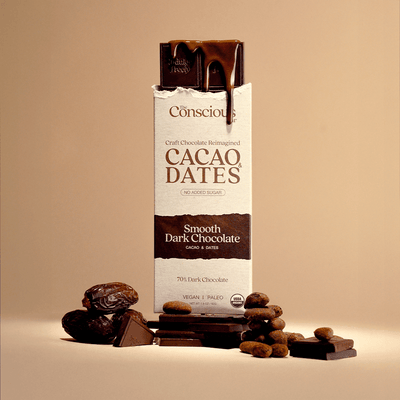
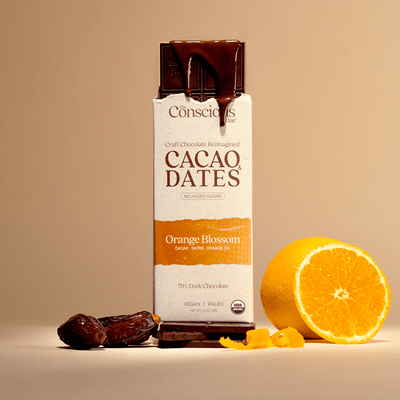
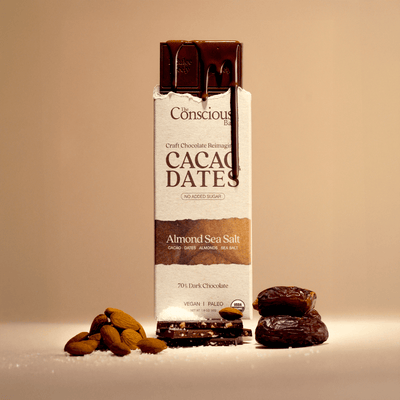
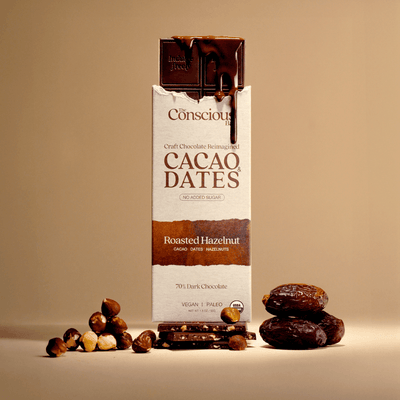
If you've ever eaten a chocolate bar and felt bloated, sluggish, or just… off, it's not in your head. The answer may lie in your gut and what you're feeding it. Here's the hard truth: diets high in added sugar can push your gut ecosystem in the wrong direction toward more inflammatory, less resilient communities. Mechanistically, higher sugar intake has been linked to shifts like increased Proteobacteria and reduced bacterial diversity, changes associated with dysbiosis and barrier dysfunction. Sources: https://pubmed.ncbi.nlm.nih.gov/34902573/ https://pmc.ncbi.nlm.nih.gov/articles/PMC7284805/ The Gut's Balance: Sugar vs. Fiber Your gut hosts trillions of microbes. Some strains help you digest food, make vitamins, produce short-chain fatty acids (SCFAs), and support the gut lining. Others can skew inflammatory if they're given the upper hand. Sugar-heavy patterns give that upper hand to the wrong players; by contrast, fiber-rich whole foods feed beneficial microbes, which ferment fibers into SCFAs (acetate, propionate, butyrate) that help maintain gut barrier integrity and calm inflammation. Sources: https://pmc.ncbi.nlm.nih.gov/articles/PMC7284805/ https://pmc.ncbi.nlm.nih.gov/articles/PMC9268559/ Where Chocolate Fits Cacao itself is a powerhouse rich in polyphenols and minerals. The problem? Most dark chocolate bars add sugar, which nudges the microbiome in the wrong direction, you just learned about. If your "healthy" chocolate relies on added sugars, you may be feeding the very microbes that drive bloating and brain fog rather than the ones that support digestion and mood. Sources: https://pubmed.ncbi.nlm.nih.gov/34902573/ https://pmc.ncbi.nlm.nih.gov/articles/PMC7284805/ The Better Play: Cacao Polyphenols + Natural Fiber Here's the good news: cacao polyphenols can act like prebiotics. In a randomized, double-blind, crossover trial, cocoa flavanols increased Bifidobacteria and Lactobacillus while decreasing clostridia, alongside favorable inflammatory markers. Other clinical and mechanistic studies also point in the same direction. Source: https://pmc.ncbi.nlm.nih.gov/articles/PMC7400387/ And if you pair cacao with the right kind of sweetness, you can feed the good guys. Dates bring soluble fiber and polyphenols. In vitro work shows that date components stimulate beneficial bacteria and SCFA production. In a human crossover study, daily date intake improved bowel function and reduced fecal ammonia and genotoxicity biomarkers associated with colon health. Source: https://www.cambridge.org/core/journals/british-journal-of-nutrition/article/impact-of-palm-date-consumption-on-microbiota-growth-and-large-intestinal-health-a-randomised-controlled-crossover-human-intervention-study/ED43BF5EF097AD6486B9BA81A9BCD2F2 What We Make (and Why) That's why The Conscious Bar uses just two ingredients: Organic cacao (for polyphenols that support a healthier microbial profile) Organic dates (for fiber + polyphenols that nourish beneficial microbes) No refined sugar to tilt your gut in the wrong direction, just real food your microbiome can work with. Source: https://pmc.ncbi.nlm.nih.gov/articles/PMC4473134/ The Takeaway Your chocolate can either feed the microbes that slow you down or the ones that help you feel your best. Choose the combo that supports balance: cacao + fiber-rich, whole-food sweetness.

Read more

The Science of the “Chocolate High”: Why Cacao Feels Like a Neurochemical Hug

Here's the full breakdown of what’s actually happening inside your brain when you eat the right kind of chocolate. Disclaimer: This isn’t about sugar-laced candy bars. This is about real chocolate—made with organic cacao, no refined sugar, and no fillers. When you eat that kind of chocolate, you're not indulging—you’re supporting your body and mind at a neurochemical level. Why We Crave Chocolate Has Everything to Do With Mood When we’re stressed, tired, or emotionally off—it’s not just a craving for something sweet. It’s often our brain asking for a mood boost. Cacao is one of the only foods that directly impacts the production of: Serotonin (feel-good neurotransmitter) Dopamine (reward and motivation) Endorphins (pleasure and stress relief) These are the same compounds released when you exercise, meditate, or fall in love. Sources: https://pubmed.ncbi.nlm.nih.gov/28431288/ https://pmc.ncbi.nlm.nih.gov/articles/PMC4696435/   The 3 Mood-Boosting Compounds Found in Real Cacao Theobromine Theobromine is a natural stimulant similar to caffeine—but with smoother effects. It promotes calm focus and increases blood flow to the brain, enhancing cognitive function without overstimulating your nervous system. Source: https://pubmed.ncbi.nlm.nih.gov/30706099/ Phenylethylamine (PEA) Known as the "love molecule," PEA increases dopamine and endorphins—creating a light euphoria and mood elevation. It's the reason raw, unprocessed chocolate can actually feel emotionally uplifting. Source: https://pmc.ncbi.nlm.nih.gov/articles/PMC9914241/ Flavonoids and Tryptophan Cacao is packed with flavonoids that improve cerebral blood flow and protect neurons. It also contains tryptophan, the amino acid your brain uses to create serotonin. Sources: https://www.ncbi.nlm.nih.gov/pmc/articles/PMC3575938/ https://pmc.ncbi.nlm.nih.gov/articles/PMC3859901/ What Happens in Your Brain When You Eat Dark Chocolate When you eat high-quality chocolate made with unprocessed cacao and no refined sugar, your body receives: Calm stimulation from theobromine Endorphin and dopamine release from PEA Serotonin support from tryptophan and flavonoids This is why it feels like a “neurochemical hug”—because it actually is. Sources: https://pmc.ncbi.nlm.nih.gov/articles/PMC7760676/ https://pubmed.ncbi.nlm.nih.gov/31010016/ Why Most Chocolate Bars Let Us Down Many commercial bars include: Refined sugar—which forces a harmful spike and crash Dutch-processed cacao—stripping away mood-enhancing compounds Fillers & emulsifiers—diluting cacao’s intrinsic benefits Only unprocessed, sugar-free cacao offers the full neurochemical package. Sources: https://pubmed.ncbi.nlm.nih.gov/31744119/ https://www.ncbi.nlm.nih.gov/pmc/articles/PMC3575938/   Why We Chose Organic Cacao + Dates Our bar uses only: Organic cacao—packed with all the beneficial compounds we just discussed Organic dates—which add natural sweetness plus fiber, potassium, magnesium, and antioxidants, helping stabilize blood sugar and support mood Dates Details: Medjool dates contain about 15% DV potassium and 4% magnesium per 100g; rich in fiber and polyphenolsSource: https://www.medicalnewstoday.com/articles/322548 Dates are low glycemic, high in antioxidants, fiber, nutrients, and helpful for digestion, blood sugar control, bone and heart healthSources:https://www.healthline.com/nutrition/benefits-of-dateshttps://health.clevelandclinic.org/benefits-of-dates/https://pubmed.ncbi.nlm.nih.gov/31744119/ So this isn’t candy; it’s a functional whole-food approach to fulfilling those emotional chocolate cravings responsibly.   TL;DR — Chocolate Isn’t Just a Treat, It’s a Tool When it’s made the right way, chocolate doesn’t just taste good—it supports your brain. It helps you show up better, feel better, and think more clearly. Thanks for being the kind of person who doesn’t just take our word for it—you went deeper. If this helped, share it with someone who needs to know the truth about chocolate.

Read more
The Science of the “Chocolate High”: Why Cacao Feels Like a Neurochemical Hug

Why Our “Healthy” Chocolate Might Be Lying to All of Us

Let’s admit something a lot of us have probably felt, but haven’t said out loud: Finding chocolate we can actually feel good about? It’s harder than it should be. We’ve stood in the aisle, holding bars with all the right buzzwords—organic, plant-based, clean, non-GMO—thinking, “Finally, something better.” But when we flip them over, the ingredients tell a different story.     The Health Halo Can Be Misleading We’ve all trusted a chocolate bar that seemed like the “healthier choice.” But even the ones that look clean at first glance can still be full of: Organic cane sugar Brown rice syrup Soy lecithin “Natural flavors” These labels are designed to trick smart, conscious people like you—people who actually care what they’re putting in their bodies. And they work, because they feel familiar. They feel safe. But when we look a little closer, what we’re often holding is still candy… just with a better marketing team.     The Real Problem Isn’t Chocolate—It’s What We’ve Been Taught to Accept We’ve all internalized the idea that chocolate has to be sweetened with sugar. That indulgence = compromise. That we can either feel good or enjoy the taste, but not both. That’s the part that’s broken. Because chocolate—the real kind, made from organic cacao—has always been a superfood. What derails it isn’t the cacao. It’s everything else that’s been added around it.     So We Took It All Out At The Conscious Bar, we started with a question: What if we just let cacao shine? Then we paired it with one of the most nutrient-rich sweeteners on earth: organic dates. That’s it. Two ingredients. Nothing else. No refined sugar. No preservatives. No confusion. Just real food that makes us feel as good after we eat it as we do during.     So What Does That Actually Look Like? Here’s what we’re reaching for now: A 2-ingredient chocolate bar we can trust A true organic cacao bar with nothing extra added Date-sweetened chocolate that doesn’t spike our blood sugar Honest, clean ingredient chocolate A daily go-to healthy chocolate snack that delivers on taste A bar that’s indulgent and nourishing—aka chocolate that’s good for you The most delicious kind of superfood chocolate A simple, feel-good cacao and dates chocolate we can stand behind     We’re Not Claiming to Have It All Figured Out We’re just trying to make something better—something honest. Because when we stopped accepting “healthier” as good enough… when we got tired of reading ingredient lists that didn’t match the front of the packaging… we realized there was another way. It doesn’t have to be complicated. Chocolate should lift us up, not let us down.     Try The Conscious Bar. No noise. No compromises. Just two ingredients—and a whole new way to chocolate.  

Read more
Why Our “Healthy” Chocolate Might Be Lying to All of Us

Chocolate’s Dirty Secret: What We’re Really Eating When We Think It’s a Treat

Let’s be honest: most of us never stood a chance. We grew up thinking chocolate was supposed to be indulgent… but definitely not healthy. It was a reward, a comfort, a little rebellion. And it worked—until we started paying attention to how it made us feel. So, like a lot of people, we started reaching for “better” options. Fancy packaging. Buzzwords like organic, fair trade, and non-GMO. Labels that felt like progress. But here’s what we started to realize: A lot of that chocolate? Still candy in disguise.   When Healthier Still Isn’t Healthy We’ve all picked up bars that looked clean, only to turn them over and see ingredients like: Organic cane sugar Soy lecithin “Natural flavors” Glucose syrup These labels are designed to trick smart, conscious people like you. People who want better, who are trying to eat more mindfully. And they work—because they look like the solution. But underneath all the feel-good branding? It’s often the same old formula: ultra-processed sugar + filler + a little cacao, just enough to call it chocolate.     We Started Asking: Why Is Sugar Always Invited? Cacao, on its own, is deeply nourishing. It’s packed with antioxidants, minerals, and mood-boosting compounds. It should be the star of the show. So why has it been paired with the very thing that spikes our blood sugar, drains our energy, and leaves so many of us feeling worse after we indulge? Maybe it’s time we stop calling that kind of chocolate a treat—and start asking for something better.     So We Went Simple: Just Cacao and Dates We weren’t trying to reinvent the wheel. We just wanted something we could actually feel good about. No refined sugar. No additives. Just two real foods: organic cacao and organic dates. The result is a 2-ingredient chocolate bar that’s as sweet, creamy, and craveable as any bar we’ve ever had—but made from whole, plant-based ingredients that support how we want to feel.     Here’s What’s Inside (and What’s Not) When we reach for The Conscious Bar, we’re giving ourselves: A truly healthy chocolate—no gimmicks. Chocolate without refined sugar—because our bodies deserve better. A bar that’s date-sweetened, not syrup-sweetened. A true organic cacao bar—nothing added, nothing hidden. A clean ingredient chocolate made from food, not formulas. A go-to healthy chocolate snack we don’t second guess. Chocolate that’s good for you—and still ridiculously good. A functional, feel-good superfood chocolate. And yes, cacao and dates chocolate that actually tastes like dessert.     We’re Not Perfect. But We’re Trying to Be Better. This isn’t about calling out other brands or making you feel bad about past choices. It’s about sharing what we’ve learned—and offering something that feels more aligned with what many of us are craving now: simplicity, honesty, and a snack that feels like self-care, not a sugar trap.     Try The Conscious Bar. For the chocolate-lovers who want to feel just as good after the bite as they do during it.

Read more